
Does Hail Damage Siding and Gutters Too? What Your Claim Should Include
Yes, hail damages siding and gutters in the same storm that damages your roof, and a claim that documents only the roof is very likely leaving real, covered damage unclaimed. The same hailstones bruising your shingles are hitting your siding, denting your gutters, and cracking your window screens on the way down. St. Charles County's spring hail season is exactly when this shows up most, and LSL Roofing documents the whole exterior on every storm inspection specifically because of how often this gets missed.
Why Roof-Only Claims Leave Money Behind
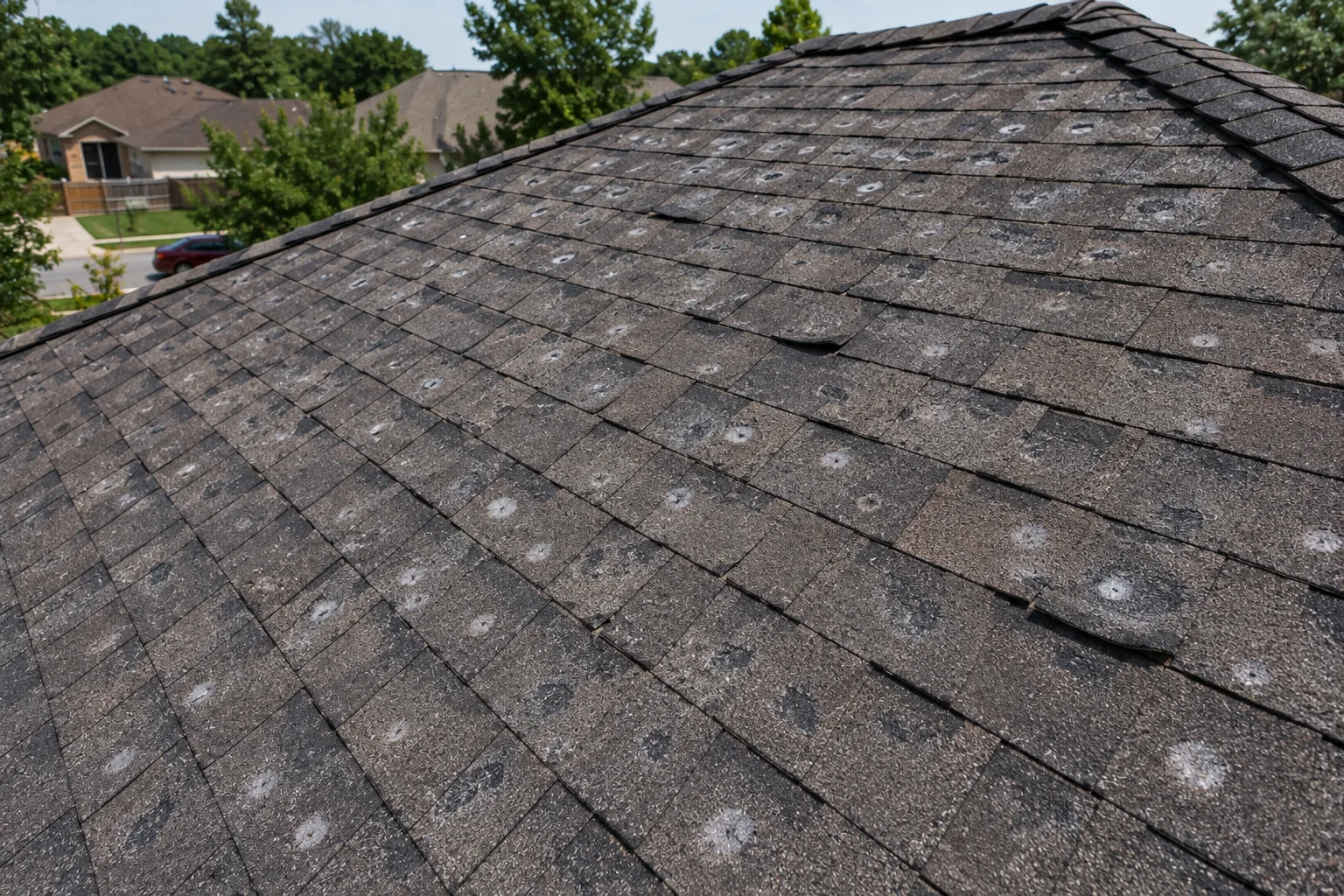
Most homeowners think about hail damage the way it's usually marketed: a roof problem. But hail falls on the entire exposed side of a house, not just the roof plane. Once a storm is severe enough to fracture a shingle mat, it's typically severe enough to crack vinyl siding, chip fiber cement, and dent aluminum gutters and downspouts on the same slope.
IBHS has run full-scale hailstorm demonstrations specifically comparing how different exterior materials, roofing and siding alike, hold up against the same simulated storm, and the pattern is consistent: material variation changes the damage outcome, but the storm itself doesn't discriminate between roof and wall. If your inspection only walked the roof, there's a real chance it missed exactly the kind of damage that pattern predicts.
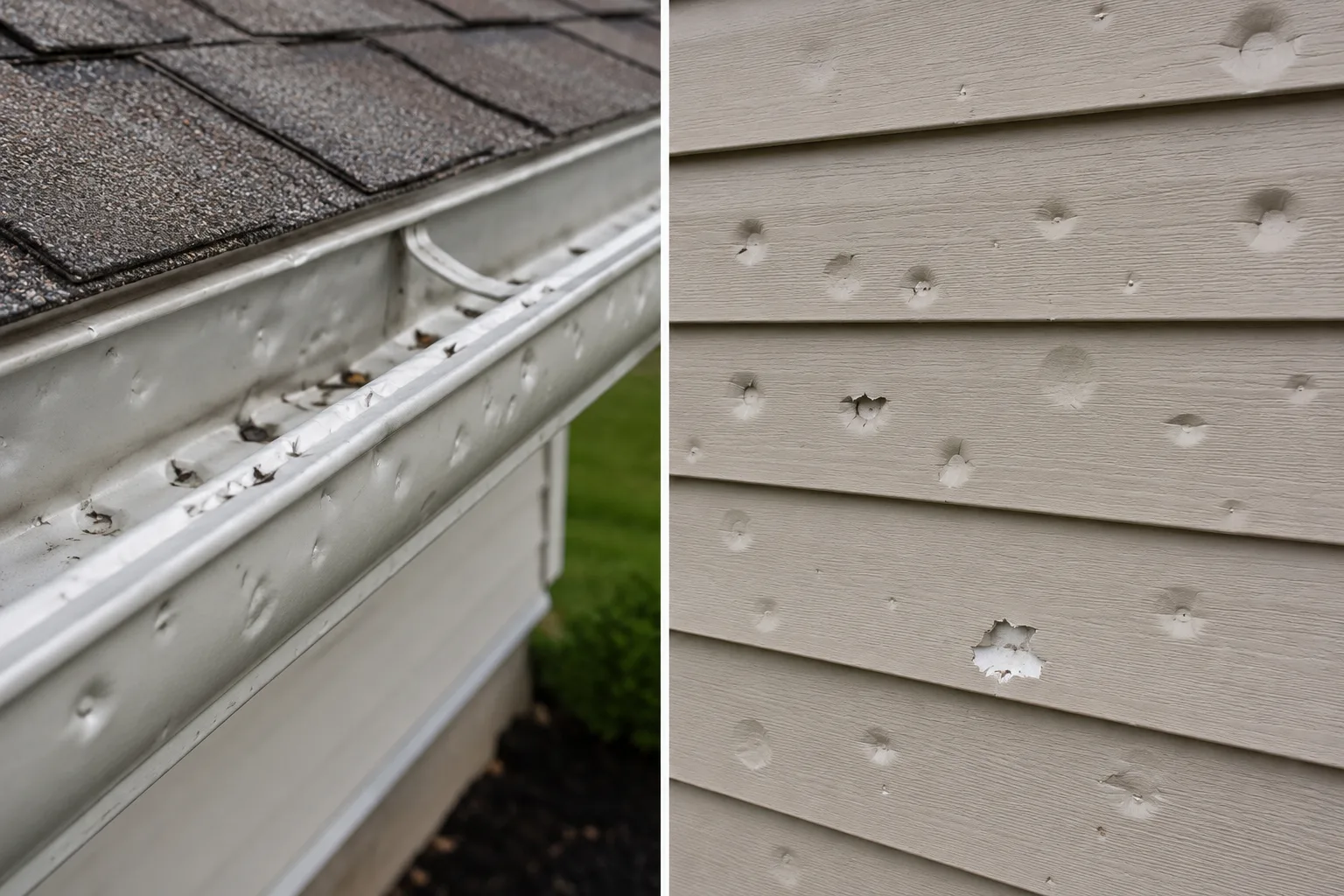
What Hail Damage Actually Looks Like on Siding
Vinyl siding cracks or punctures when hail hits hard enough, often leaving a visible hole or a spider-crack pattern radiating from the impact point. On fiber cement siding, the damage tends to show as a chip or a hairline crack rather than a hole, since the material is more rigid. Either way, the damage concentrates on the side of the house that faced the storm, the same directional pattern that shows up on a damaged roof slope.
Dents and dings on softer trim, fascia, and soffit material are easy to miss from the ground, especially on a two-story elevation. A roof-focused inspection that never walks the full perimeter of the house at eye level can miss this category of damage entirely.
What Hail Damage Actually Looks Like on Gutters
Gutters and downspouts are metal, which means hail dents them the same way it dents a car hood or an HVAC unit's fins. Small, round dents scattered across a gutter run, especially on the storm-facing side, are one of the most reliable confirmation signs that real hail hit the property, since metal holds an impact mark in a way shingles don't always show as clearly.
Adjusters often use gutter and downspout dents as corroborating evidence for a roof claim, which means documenting them thoroughly doesn't just support a separate siding-and-gutter claim. It strengthens the roof claim too.
- Vinyl siding: cracks, punctures, or spider-cracking radiating from the impact point
- Fiber cement siding: chips or hairline cracks, concentrated on the storm-facing elevation
- Gutters and downspouts: small round dents, most visible on the side that faced the storm
- Window screens and trim: torn mesh or dented aluminum framing
- Outdoor AC unit fins: bent or dented, another reliable hail confirmation point
Getting the Whole Exterior on One Claim
Storm and hail damage to siding and gutters is typically covered under the same wind and hail portion of your homeowners policy as roof damage, when it comes from the same covered event. Missouri's Department of Commerce and Insurance publishes general consumer guidance on what to check in your specific policy, but the practical step that matters most is documentation: photographing siding, gutter, and roof damage together, tied to the same storm date, so the whole exterior scope gets submitted as one claim rather than something you have to reopen later.
This is also a scheduling advantage, not just a paperwork one. One local crew handling roof, siding, and gutter repair on a single project means one mobilization, one schedule, and no second round of coordinating contractors after the fact.
How to Tell Storm Damage From Ordinary Wear
Not every ding on a gutter or every faded patch of siding is storm-related. The same logic that separates hail damage from normal shingle wear applies here: storm damage is scattered, tied to a specific event, and concentrated on the side of the house that faced the weather. Ordinary wear is gradual, even across all elevations, and unrelated to any single date. If you're unsure which you're looking at on the roof itself, our guide to hail damage versus normal wear walks through the visual differences in detail, and the same directional logic applies to siding and gutters.
Frequently Asked Questions
If my roof wasn't damaged, could my siding still have hail damage?
It's less common but possible, particularly with wind-driven hail at a steep angle that hits walls harder than roof slopes. It's worth a full exterior check after any significant hailstorm, not just a roof inspection.
Will my insurance company automatically include siding and gutters in a roof claim?
Not automatically. The adjuster documents what's presented to them. If siding and gutter damage isn't pointed out and photographed alongside the roof damage, it's easy for it to go unscoped in the initial claim.
Can I add siding and gutter damage to a claim after it's already been filed?
Often yes, through a supplement request, especially if the damage is clearly tied to the same storm date as the original claim. It's simpler to document everything up front, but a supplement remains an option.
Does replacing siding after hail damage need to match the whole house?
Depending on your policy and Missouri case law on matching, if damaged siding can't be matched to the undamaged remainder because the product is discontinued or the color has weathered differently, you may have grounds for a fuller scope than just the damaged panels. Document color and product matching concerns clearly.
Is it worth getting siding and gutters checked even if I don't think they're damaged?
Yes, especially after any storm severe enough to prompt a roof inspection. A free inspection covering the whole exterior costs nothing and either confirms there's nothing to claim or catches damage you'd otherwise miss.
For the full roof-claim process this fits into, see our Missouri roof insurance claim guide. Our insurance claims team documents the entire exterior, not just the roof, and our siding and seamless gutters services repair what the storm actually damaged.
Get Your Whole Exterior Checked, Not Just the Roof
One free inspection covers roof, siding, and gutters together, so nothing legitimate gets left off your claim. Call LSL Roofing at (314) 327-8842. We answer live 24/7 and offer same-day inspections.
Free, photo-documented inspection and a firm written price. No pressure, no in-home sales pitch.