
Attic Ventilation Problems That Kill Missouri Roofs Early
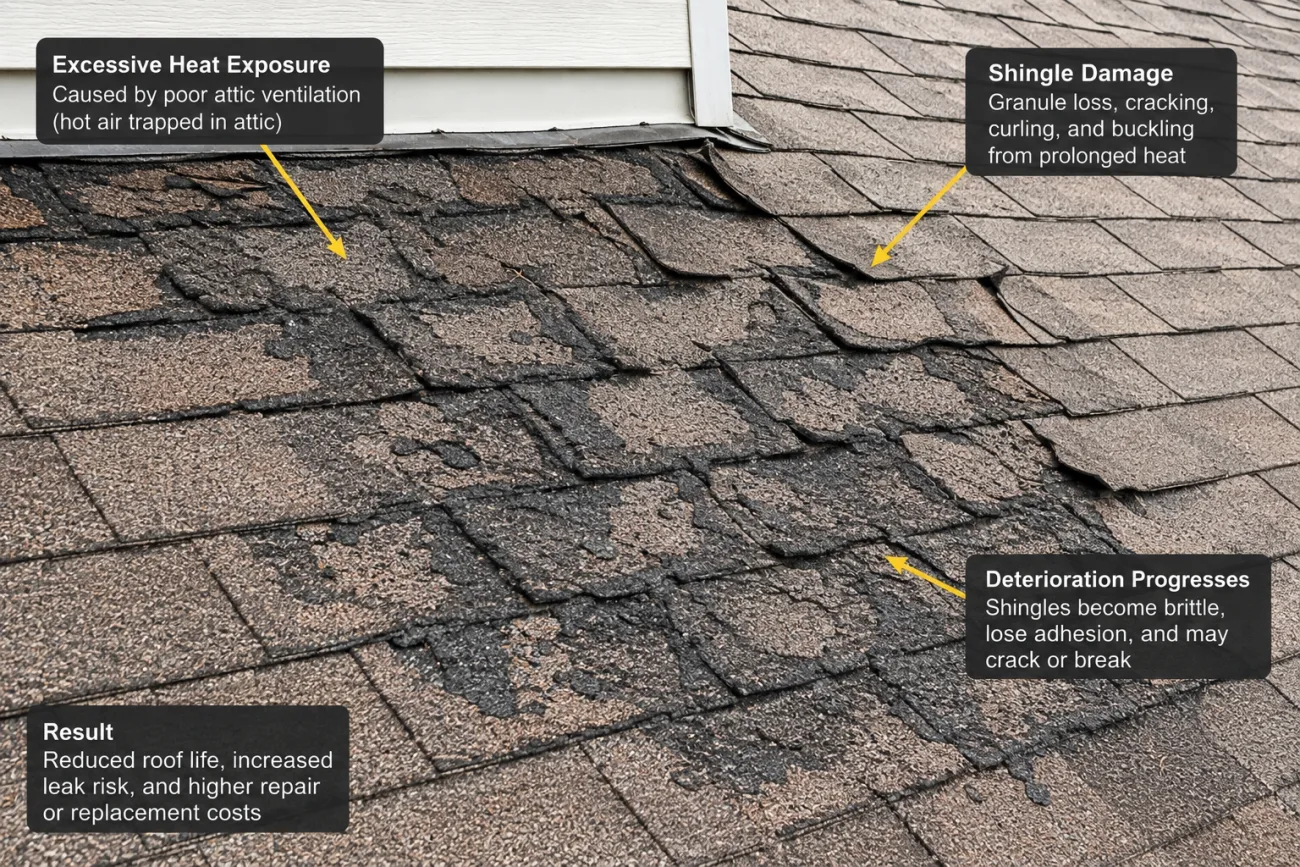
A roof that fails before its shingles are worn out almost always has an attic ventilation problem underneath it, not a shingle problem on top of it. Trapped summer heat cooks shingles from below, trapped winter moisture rots the deck and feeds ice dams, and either one can cut ten or more years off a roof that would otherwise have made it to its full rated life. The fix is rarely more vents. It's balancing the vents you have, which is exactly what LSL Roofing gets called out for most often once homeowners realize their attic, not their shingles, is the real problem.
Here's what actually goes wrong inside a poorly ventilated Missouri attic, how to recognize it before it costs you a roof, and why this is one of the few roofing problems that's genuinely cheap to fix if you catch it early.
Why Missouri's Climate Makes This Worse
An attic without balanced airflow behaves differently depending on the season, and Missouri gives it a hard test in both directions. In summer, a poorly vented attic can climb well past 130 degrees under direct sun, and that heat radiates downward through the shingles from underneath, accelerating the same UV and thermal breakdown that normally takes decades. In winter, warm, moist air escaping from the living space below gets trapped in the attic instead of venting out, where it condenses on cold roof decking and rafters.

The U.S. Department of Energy's guidance on roof and attic components lists ice dams forming in gutters and causing water to back up under shingles, along with water vapor entering the attic without a way to escape, as two of the primary mechanisms behind attic-related roof damage. Both are ventilation problems at the root, not roofing material problems, which is exactly why a roof can fail early even when the shingles themselves are a good product installed correctly.
The Physics: Intake, Exhaust, and Why More Vents Isn't the Answer
Ventilation works on a simple principle that's easy to get wrong in practice. Cool air needs to enter low, at the soffits, and warm, moist air needs to exit high, at the ridge or upper roof. If exhaust vents are added without matching intake, the system doesn't create airflow. It short-circuits, pulling conditioned air out of the living space below instead of pulling fresh air through the soffits the way it's supposed to.
Building codes address this with a net free ventilation area, or NFA, requirement tied to your attic's floor space. Professional building-enclosure standards documentation puts the baseline model code requirement at 1 square foot of NFA for every 150 square feet of attic floor area, split roughly evenly between low intake and high exhaust, with a reduced 1-to-300 ratio allowed when a proper vapor barrier is present. Getting that ratio wrong, usually by adding exhaust without checking whether the soffits can actually feed it, is the single most common ventilation mistake we find on Missouri attics.
- Ridge vents pair with soffit intake for the most even, quiet exhaust across a full roof
- Solar-powered vents actively pull air on hot afternoons with no wiring, useful where ridge length is short
- Slant-back static vents move air with no moving parts and fewer roof penetrations than box vents
- Soffits blocked by paint, insulation, or old blocking choke intake even when exhaust looks adequate
- A system with plenty of exhaust and no working intake performs worse than no exhaust at all
The Warranty Problem Almost Nobody Mentions
Manufacturer shingle warranties are not unconditional. CertainTeed and every major shingle maker require balanced attic ventilation as a condition of coverage, and a claim tied to heat-related shingle failure on a documented under-ventilated attic can be denied on that basis alone. Homeowners rarely find this out until they're filing a claim on shingles that failed a decade early, at which point the ventilation problem that caused the failure is also the reason the warranty doesn't cover it.
This is one of the more overlooked reasons ventilation deserves attention on its own, separate from any roof replacement conversation. It isn't just about comfort or energy bills. It's the thing standing between a legitimate shingle failure and a warranty claim that actually gets paid.
Signs Your Attic Isn't Ventilating Correctly
Most ventilation problems show up as symptoms elsewhere before anyone thinks to check the attic itself. A second floor that stays hot long after the rest of the house has cooled down is one of the more common tells, since it usually means the attic above it is holding heat rather than venting it.
Ice dams forming along the eaves in winter, even on a roof that isn't old, point to warm air escaping into the attic and melting snow from below rather than the roof staying uniformly cold.
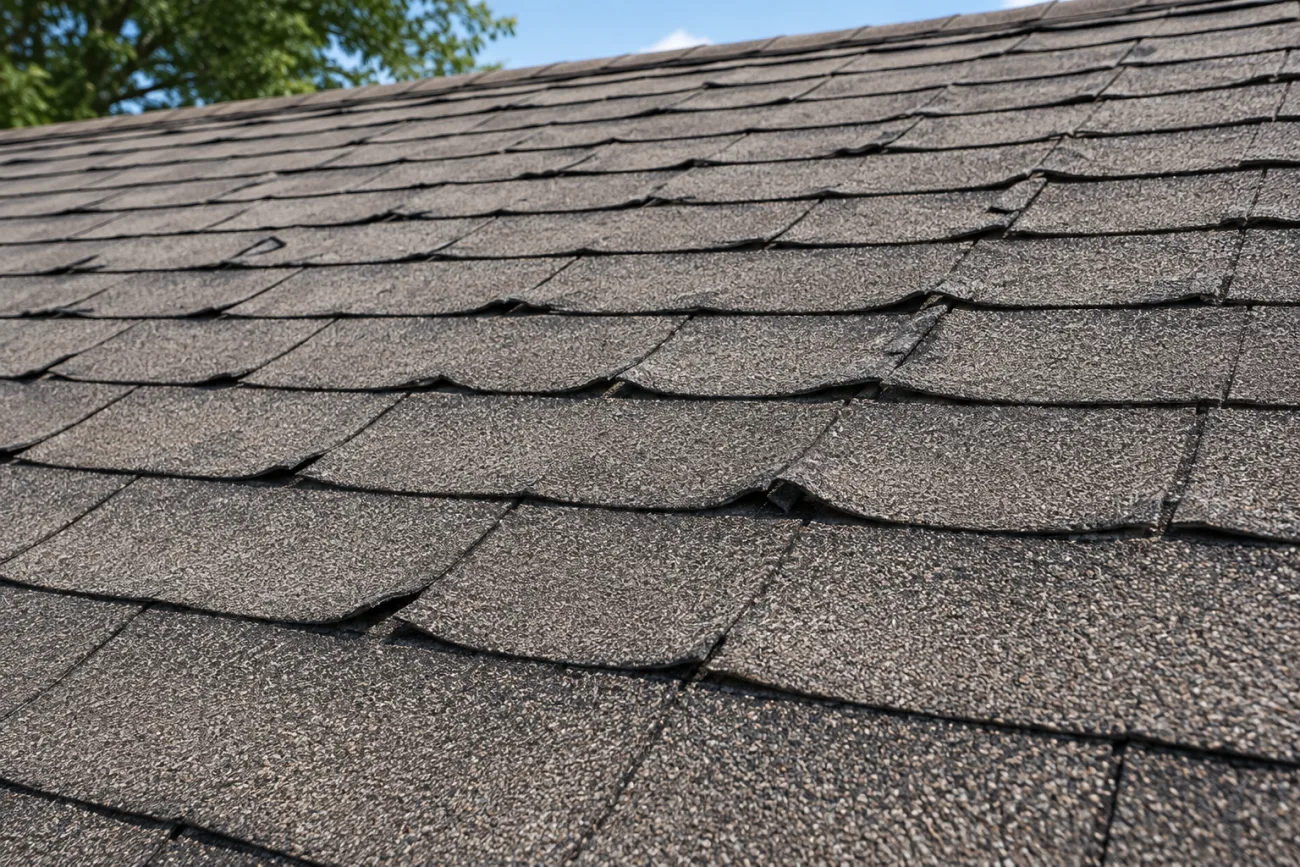
Curling or blistering shingles years before their rated lifespan are a downstream sign of the same airflow problem, and they're one of the items covered in our guide to the signs you need a new roof. Frost or water stains on the underside of the roof deck and a persistent musty smell upstairs round out the list.
The U.S. Environmental Protection Agency's guidance on mold and moisture in the home notes that trapped moisture is one of the most common conditions that leads to mold growth in a structure, which is worth taking seriously beyond the roof itself. An attic that's failing to ventilate correctly isn't only a roofing issue. It's a whole-house moisture problem that happens to start above the ceiling.
What Fixing It Actually Looks Like
Correcting ventilation almost never requires a new roof. Our attic and roof ventilation work usually means calculating the attic's actual net free area requirement, confirming the soffits are clear and actually breathing, and rebalancing exhaust with the right mix of ridge, solar, or slant-back vents to match. Tony, LSL's lead roofer, is GAF-accredited specifically in roof ventilation and has designed balanced systems as a CertainTeed Master Craftsman for close to thirty years, which means the calculation gets done properly instead of guessed at with a rule of thumb that doesn't match your specific attic.
If your roof is sound and the problem is purely airflow, ventilation is often a standalone fix with a firm written price, not something bundled into a bigger roof repair job you don't need.
Frequently Asked Questions
Can bad ventilation really shorten the life of a good roof?
Yes. Trapped heat accelerates the same breakdown that normally takes a shingle to the end of its rated life, and trapped moisture rots decking and feeds ice dams, both of which shorten a roof's usable life independent of the shingle's own quality.
How do I know if my attic has enough ventilation?
The reliable way is a measurement, not a guess: calculating your attic's square footage against the required net free area and confirming your existing vents actually deliver that much open area, split between intake and exhaust.
Will adding more roof vents fix a hot attic?
Not by itself, and it can make things worse if the added exhaust doesn't have matching soffit intake to pull from. A system needs balance, not just volume.
Does poor ventilation void my shingle warranty?
It can. Major manufacturers require balanced ventilation as a condition of shingle warranty coverage, so a heat-related failure on a documented under-ventilated attic risks a denied claim on top of the failure itself.
Is ventilation something I can fix without replacing my roof?
Often, yes, if the shingles themselves are sound. Rebalancing intake and exhaust is frequently a standalone repair, separate from a full roof replacement.
Find Out What Your Attic Actually Needs
Your roof might be fine. Your attic might be the reason it won't stay that way. A free inspection tells you which one it is before you spend a dollar on either, and ventilation fixes are often the cheapest thing on this whole site.
Book a free roof inspection that measures the airflow you actually have, or compare long-term roof options in our architectural shingle vs. standing-seam metal breakdown.
Free, photo-documented inspection and a firm written price. No pressure, no in-home sales pitch.